


In today’s rapidly developing field of advertising, Semantic SEO has entered the limelight as a critical factor defining how search engines view content. Semantic SEO is different from traditional SEO that concentrates more on words than the meaning behind them. This approach makes it easier for search engines to return results that meet the intent of the user hence making the search experience more fruitful.
Semantic SEO has emerged as the bedrock of the current marketing techniques for enterprises to enable them to interact appropriately with the intended consumers. This way the content will be optimized according to the user’s intent and the connections between the conceptions and brands will improve the positions in the search results, thus ensuring more useful interaction.
In this guide, you’ll learn exactly what Semantic SEO is and how it works, as well as vital strategies, tools, and case studies to help you make the most of it.
What is Semantic SEO and How Does it Work?
Most semantically related SEO techniques define the optimization process through the meaning and context inferred with the search terms. As such, this approach also enables the search engine to grasp the kind of relationships existing between different concepts, which in turn enhances its search result based on user intent.
Semantic SEO is something that has started to make its way into the conversation as more and more companies started adopting semantic search technologies. Beginning with unnatural language processing and learning algorithms like Google’s Hummingbird update early in 2013, semantic search sought to go past the keyword benchmarks. As technology advanced the algorithms in search engines also changed and generally adapted to regard more the user’s intent and the context in which the search term is typed leading to more profound understanding of language and meaning.
Currently, it is more important than ever to make proper use of Semantic SEO. Thanks to the Voice Search Optimization, mobile-first approach, and other AI-based tools, users are demanded to get not only correct but also relevant information. Companies follow such disparate requirements since they have to deliver content that will be relevant to bots, as well as visitors.
Semantic SEO Key Pillars
User Intent:
Users need to know why they are searching for something in the first place, and this knowledge needs to be uncovered. The main element of Semantic SEO is based on the matching of the meaning of the Website content and the searcher’s intent, which can be either informational, navigational or commercial. This helps users to access what they are looking for easily and fast.
Example: Optimizing for User Intent
Scenario:
An organization that deals with outdoor products and services wishes to rank higher in organic search.
Implementation:
It then uses the content team to perform keyword research and work out the main search terms like ‘best hiking boots’ and ‘hiking gear essentials’. They create a comprehensive guide titled “The Ultimate Guide to Hiking Gear,” which covers related topics such as:
- Types of hiking boots
- Essential gear for beginners
- Few guidelines when considering the right equipment
This guide is divided by user intents, informational, navigational and transactional to offer comprehensive information that will suit the search intents of users.
Content Context:
In addition to keywords, therefore, there is also a need to make web content that gives the ‘background’ to a topic. This refers to applying similar terms and phrases as well as registered and derivative descriptors to ensure search engines get the amount of information on a particular topic.
Structured Data:
The use of structured data (schema markup) which aims to enhance the comprehension of the data placed on the pages. Due to the evident context about the content such as products, reviews, events, and many others, the use of structured data promotes the appearance of rich snippets on the results page.
Example: Utilizing Structured Data
Scenario:
A business selling products through its online store aims to improve its product positioning on search engines.
Implementation:
The specific web development task used for the schema markup includes JSON-LD for product types of pages. This structured data includes details such as:
- Product name
- Price
- Availability
- User reviews and ratings
This means that by adding structured data, the site makes it easier for search engines to provide rich snippets, which is likely to increase its visibility as traffic to the link is likely to click on it.
Topic Clusters:
When content is grouped according to topics, it becomes easier to internal link and establish a flow of how information is structured. Through the development of the pillar content to cover extensive topics and reassured by the supporting content, such websites establish their authority to handle certain issues, thus increasing their chances for ranking.
Natural Language Processing (NLP):
The application of NLP is making it possible to develop outputs in the form of text that closely resembles a human-like ability to understand and even dialogue. Not only does this enhance interaction but it complies with the manner search engines are amplifying the analysis and interpretation of language.
Through the utilization of these areas, businesses can take advantage of Semantic SEO to increase the site traffic, and hence, increase the satisfaction of users.
Why is Semantic SEO Important?
Search engines are the working environment for SEO specialists. The task of these vast corporations is to give the user a relevant answer to his request in simple words so he can understand it easily.
Most importantly, it improves the user experience since the focus lies in the user’s purpose and situation which allows the sought information to be meaningful for the user. Users are therefore able to quickly find what they want and this results in more time spent on your site hence deeper engagement with your content.
Semantic SEO enhances the ability to rank on a search engine. Search engines are always improving their search algorithms, and since semantics helps to better match your content to how search engines interpret queries, your content is more likely to meet those new algorithms. This alignment increases your options for placing on top of the search engine results.
With the rise of voice search , Semantic SEO plays a larger role. Since voice equipment comes with conversational features, launching content with distinctive conversational keywords will assist in ranking the content high on voice search engines. I opine that this shifting of customer loyalty changes the strategic landscape within which businesses have to maneuver.
The other obvious benefit of Semantic SEO is the possibility of using rich snippets and featured answers in SERP. These enhanced listings are page one flat featured snippets and other key breaks which result from structured data implementation not only drives more clicks but authoritative content yields trust signals to users.
Semantic SEO implies flexibility in regard to the changes in search engine systems. As search technology becomes more centered at identifying the spirit of a search and not merely the strings, Semantic SEO concerns this movement hence making your strategies agree with the trend.
Ranking Factors:
Semantic SEO stands as one of the most important methods for the increased presence of brands on the Internet in the context of the dynamics of the digital marketing environment. In contrast with traditional SEO that is mainly concerned with keyword usage, semantic SEO reflects the concern with regard to user purpose and the topics complementing the content. This shift of emphasis entails that numerous ranking factors are closely involved in the overall performance of content in SEO.
Content Ranks Higher
The foundation of semantic SEO is the publication of unique and valuable content that will meet the users’ needs. Generally good ranking content tends to be useful, interesting, and relevant to the user’s search terms. Over the years, Google has refined its algorithms to reward content that shows E-E-A-T: Experience, Expertise, Authority, and Trust. This means that just releasing content, replete with keywords, is no longer sufficient.
To create content that ranks higher, it’s important to focus on several aspects:
- Comprehensive Coverage: Devote enough time to the topic, and discuss it in view of the multiple aspects and the sections it comprises. Thus, the benefits to the user are provided by pointing out your expertise in the matter at the same time.
- Answering User Questions: Type your topic on Google search and see the suggestions or questions on these two websites; Google Auto-Complete and Answer the Public Provide. Using them in your content is a way that enhances the pertinence and usefulness of a text.
- User Engagement: Any content that can make visitors stay on a certain page and interact with the website such as comments and sharing suggests Google that the certain content is worth it. As for textual and non-textual content, you might find it relevant to supplement the text with including videos, infographics, and images.
- Freshness of Content: Another method involves refilling knowledge, and existing content with updates to ensure enhanced rankings. It prefers current data showing the most up-to-date trends and information in terms of search results.
- Readability: Written content should be clear and employ an organization that is easily understandable. Make it easy to read by using subheadings, bullet points, and short blocks of text. Tests for readability can be done with the help of such tools as Hemingway or Grammarly.
Keywords Rank
However, as with semantic SEO, keywords are no longer strictly relevant to the ranks by themselves, but as always they still have a significant role during the process. Identify is therefore to make use of keywords without being overly keen on them. Here are some best practices for keyword use in a semantic SEO context:
- Long-Tail Keywords: The third recommendation concerns the usage of long-tail keywords that provide more detailed information about the user’s search. These phrases are usually less crowded and might potentially get more specific user clicks. For example, instead of the keyword “shoes”, use “best running shoes for flat feet.”
- Contextual Keywords: It will also be helpful to incorporate not only synonyms and words closely related to the keyword with your content to show search engines that your content is related to a given topic. While this will come later, it is a highly relevant strategy that reflects how Search Engines work under semantic analysis.
- Keyword Placement: Key primary keywords should be introduced in the essential section including the title, meta description, header tags, and the initial text of up to 100 words on the page. This tells search engines what you think the main theme of your page is.
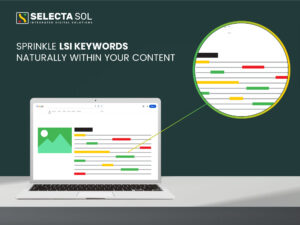
- LSI Keywords: Secondly, bound keywords are the secondary keywords or Latent Semantic Indexing (LSI) keywords are keywords that belong to the same semantic relevance as your focus keywords. These when used in your content can get the results on topic relevancy and also aid the search engines to understand your content better.
- Avoid Keyword Stuffing: Do not use formal grammar and syntax. It is important not to use keywords excessively, as it may lead both to penalties by search engines and low usability. But before attempting to optimize your site for the search engine crawlers, try to compose for the actual humans.
Quality Signals to Google
Google algorithm involves companies of different quality channels for assessing the value list of web pages. They all serve to inform search engines about whether the content published is credible, authoritative, and valuable. Here are key quality signals to consider:
- Backlinks: Backlinks which are definitions from other quality websites inform Google that the contents on your page are relevant and trustworthy. Pay attention to the other producers and leaders in your niche, to get backlinks from them without requesting it.
- User Behavior Metrics: The lack of formality means that the site can be easily modified, but metrics like bounce rate, CTR, and dwell time will tell you how users are interacting with your content. Information that will make the users stay on the site and seek more information should rank higher.
- Social Signals: Although shares have no direct influence on the rankings, they will lead visitors to the posts and increase visibility. Promote more sharing by developing items that can be shared as well as participating on social media.
- Expertise and Author Credentials: Sharing the author credentials at the workplace, particularly in the areas that may need special skills (medical, economic, etc.) helps to boost the perceived quality of the given content. As such, author bios alongside links to the credentials should be provided to enhance credibility.
- User Reviews and Testimonials: Features that may improve credibility include the incorporation of testimonials from the users of the product. Positive reviews do encourage the user or user community since they can base it on a previous experience from a user or group of users or even the whole ever-growing World Wide Web community.
Content in PAA
People Also Ask (PAA) is an element of featured snippets in the SERP, where users are offered a list of questions on a particular topic. Getting a listing on PAA can greatly increase the traffic to your website. To optimize for PAA, consider the following:
- Identify Relevant Questions: Some excellent ways of finding out what consumers want include Answer the Public and keywords research tools. Make sure to answer these questions in your content as it may help you to be indexed by PAA.
- Structured Answers: As much as possible, offer direct, simple answers in the form of Questions and Answers being asked. It is more advisable to organize your content in pointing or numbering methods in order to help the users scan easily through the content provided.
- On-page SEO: Match the kind of content you produce with the questions that you intend to address. To ensure that your question is relevant to the sections where it appears, repeat it in the title/heading, as well as within the body of a section.
- Monitor PAA Performance: Another way of ensuring that your content is on the PAA section is to check the sections where your target keywords are, and see if there is content of your own there. If not, it needs to be fine-tuned towards what is being typed in the search engine by the users.
- Create FAQ Pages: Build separate pages specifically with defined questions and answers in your niche of operation. This can increase your possibility of getting on PAA as well as offer resources to your audience in case you seem to be relevant.
Add Structured Data
It is the type of data that is most often introduced into the code using schema markup, which can help search engines get more context about the content on your site. It also results in better rankings and improved visibility in rich snippets with this understanding enhanced in turn. Here’s how to effectively utilize structured data:
- Use Schema Markup: Choose an appropriate set of schema types for your content which can contain articles, FAQs, reviews, and products. This assists search engines in properly sorting your content and displaying nice-looking snippets.
- Test Your Markup: To check how your schema is implemented, you need to go through Google’s Structured Data Testing Tool. It is greatly beneficial as it is this tool that will underline errors or warnings that can be responded to subsequently.
- Keep It Updated: When changing material, make sure to keep the structured data in check as well. Incorrect or old structured data can help the wrong information on the internet and thus affect your ranking.
- Monitor Performance: Check if your structured data affects search performance using Google Search Console. Search for opinions with searches that are relevant to rich results including its clicks and click-through rates.
- Focus on User Experience: In the end, the professionals use structured data to improve the user experience by providing the most relevant and informative results. Always aim to address the interests of the end-users any time they are incorporating structured data.
Build Out Topic Clusters on Your Website
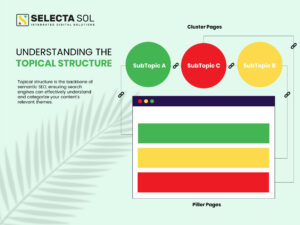
Topic clusters are one of the major practices that help increase semantic relevancy and strengthen the site’s authority. The basic concept of this method is to organize the content to be presented according to the similarities in content, tying it together by associating it with a particular idea and organizing it into a logical hierarchy. Here’s how to build effective topic clusters:
- Identify Core Topics: Find out some of the most important issues concerning your audience and company. Find out useful keywords to target and other related topics.
- Create Pillar Content: Create a large number of high-quality pillar pages for each topic and make them a one-stop guide for each theme. These should be directed to a general concept overview and other subtopics or articles related to the concept.
- Link-Related Content: Produce related articles or blog entries that focus on the steps or some of the subtopics tackled for greater elaboration. It is also important that all these pieces point back to the pillar pages and to each other so it is critical to map them out internally.
- Enhance User Navigation: Topic clusters enhance user experience because of the way they are arranged. With more content relevant to the site and users, users can browse more content, all this will improve the users’ stay rate.
- Improve Authority and Relevance: The best way to optimize your site to rank high for your core term is to group your content around it, which notifies search engines that your site is authoritative with regard to the specified theme. This may result in better ranking and visibility to all contents within the respective cluster.
- Monitor Performance: Always be aware of how your topic clusters are ranking in search engine result pages. It is possible to adapt content material generation to KPIs and results, as well as shifting trends in consumer engagement.
Incorporating these ranking factors into your semantic SEO strategy can significantly enhance your website’s visibility and authority. By focusing on high-quality content that satisfies user intent, using keywords strategically, building quality signals, optimizing for PAA, implementing structured data, and creating topic clusters, you can improve your chances of ranking higher in search engine results. As search algorithms continue to evolve, adopting these practices will help you stay ahead of the competition and effectively connect with your audience.
Effectiveness of Semantic SEO
Google’s algorithm prioritizes content that is relevant and contextually appropriate. Semantic SEO helps search engines understand the relationships between words and concepts, ensuring that your content is presented to the right audience.
Increased Click-Through Rates: According to Search Engine Land, Structured data has an impact on the click through rates by as much as 30 % through utilization of rich snippets, which is achieved by websites that employ the use of this type of data. By implementing structured data markup, you can help Google understand your content’s format and display it in rich results or featured snippets. These visually appealing formats can attract more clicks and improve your website’s visibility.
Voice Search Growth: According to a blog on Medium, It predicts that they expect about half of all the searches to be voice by 2024 which highlights the onset of increasing relevance of conversational and natural language. Voice search queries are often spoken in conversational language, making semantic SEO an ideal approach for optimizing content for these types of searches.
Enhancing Entity Recognition: Semantic SEO helps in entity recognition, which involves identifying named entities such as people, places, and organizations within text. By understanding the context of these entities, search engines can provide more relevant results that are customized to the user’s specific interests.
User Engagement: According to an article on HubSpot, Higher engagement time for users, which translates into between 20% to 25% increase in time spent by viewers on pages that contain answers to frequently asked questions in the form of curated content is always a plus for SEO.
Search Query Relevance: Semantic SEO utilizes natural language processing (NLP) techniques to analyze the structure and meaning of language. Employing semantically related keywords/phrases will increase accuracy of content relevance by 40% to ensure it can resonate with the new algorithms that are targeting relevance to the user.
Such statistics demonstrate the effectiveness of integrated Semantic SEO approaches as part of the Internet marketing arsenal.
How Semantic SEO Came into Existence
1. Hummingbird

Google Hummingbird is a major search algorithm update that was introduced in 2013. It is one of Google’s biggest updates and was aimed at improving search performance by better understanding user intent and query context.
The Hummingbird algorithm uses new natural language processing and semantics to better understand the meaning of entire sentences and phrases, rather than just individual keywords. As a result, users receive more relevant search results.
Hummingbird also changed the way search results were displayed, highlighting the most relevant pieces of content on web pages, such as answers to questions or topic lists, and presenting them as rich results. It was largely the Google Hummingbird update that made significant changes to the way the search algorithm worked, which helped usher in semantic search.
2. RankBrain

Google RankBrain is an artificial intelligence (AI) algorithm that was introduced by Google in 2015 to help Google’s search engine better understand the intent behind user queries and provide more relevant search results.
RankBrain uses machine learning to analyze massive amounts of data and study it to improve its ability to understand search queries, which is then used to rank websites in search results based on their relevance and value to the user.
3. BERT

Google BERT (Bidirectional Encoder Representations from Transformers) was introduced in 2019. It is a natural language processing (NLP) technique developed by Google to improve the accuracy of search results by better understanding the context and meaning of search queries.
BERT is a deep learning algorithm that uses a transformer-based architecture to analyze natural language text. It is designed to understand the meaning of words in relation to other words in a sentence, rather than treating them as separate units.
Unlike traditional NLP models that process language unidirectionally (from left to right or right to left), BERT takes a bidirectional approach. It takes into account the full context of a word by considering the words that come before and after it in a sentence.
Semantic SEO vs Traditional SEO: Major Difference

Since digital marketing is a rapidly evolving industry, knowledge of the specific details of SEO activities is crucial for companies that want to improve their presence on the World Wide Web. Two primary methodologies exist: other types of SEO include; traditional SEO and semantic SEO. Both work to increase the ranking of a website that is indexed by various search engine systems; however, the strategies they use are poles apart. While traditional SEO heavily involves the use of keywords, semantic SEO is based on the understanding of the intent of a user and the context of the content.
Traditional SEO:
Traditional SEO traces its origin to keyword-oriented techniques. When creating a traditional SEO strategy, the main aim is to focus on the selection of particular phrases that clients might enter. This process is followed by a very careful selection of the keywords and phrases that are relatively popular among Web users.
Once such keywords are determined, they are then well positioned across the whole website in such areas as title tags, meta descriptions, header tags, and even body texts. The premise upon which webmasters depend is the belief that returning keyword matches to the search engine will translate to traffic.
It’s estimated that 94% of search engine users must look past the first page of results. This means optimizing enterprise SEO and traditional SEO strategies is essential if businesses want to compete in today’s digital landscape. However, several challenges for both methods need to be addressed.
Backlinking has been an important practice of traditional SEO practices. In essence, websites that have numerous backlinks from other credible sources are highly ranked by search engines. The authority of such a link increases or enhances the probability of achieving the desired ranking for specific keywords.
Though it increases the number of backlinks, it’s generally frustrating, as internet marketing practices such as link farming or guest posting for the pure intention of getting backlinks to the site do more harm than good, as they affect the quality of the content.
Finally, the drawbacks of the traditional approach to SEO are best illustrated by issues connected with user experience.
Over time improvements to these search engines have favored content that seeks to answer the needs of the end user. When applying traditional SEO, the content of the site tends to be filled with a number of keywords with the intention of influencing rankings. This practice can lead to the generation of low-quality content, which is not very informative and therefore could have a non-intuitive result.
Semantic SEO
On the other hand, semantic SEO is the other type of optimization that comes together in response to these disadvantages. Whereas the keyword-based approach is centered on specific words, semantic SEO takes into account the meanings of the words being used, and the relations between these meanings. The idea is not to produce content that might not be what users want based on their intent, relevance, and comprehensiveness.
The knowledge of user intent is one of the primary elements that every company conducting semantic SEO has to take into consideration. This means going beyond the keywords to track the reasons behind driving search intentions.
For instance, a user searching for the ‘best-running shoes’ may not only expect to find a list of shoes but may also need information regarding the shoes, their comparisons, or perhaps recommendations on which shoes to consider buying.
That is why, Semantic SEO aims to encompass this variety by creating materials that cover one or another aspect of the main subject.
Semantic SEO promotes the creation of content clusters around broader topics. Instead of focusing solely on individual keywords, this approach encourages content creators to develop interconnected pieces that comprehensively cover a subject.
For instance, a website about running might include articles on various types of running shoes, tips for injury prevention, and training plans. This not only improves the site’s authority on the topic but also provides users with a more holistic experience, allowing them to explore related content seamlessly.
The changes in search engines and the application of natural language processing (NLP) have made semantic SEO even more important. Traditional keyword-based search is now in a better position with the help of context, sentiment, and relevance from the perspective of the search engine Google. In other words, quality, relevance, and good positioning allow high ranking with only occasional usage of keywords identical to those in the query.
With these significant differences in mind, the outcome of these two approaches to selecting a business’s SEO tactic is better for their visibility, users, and results on the web.
When it comes to optimizing content for semantic SEO, leveraging free tools can significantly enhance your strategy. These tools help you uncover user intent, identify related topics, and generate valuable insights. Here are three popular free tools that can aid in semantic SEO: Google Auto-Complete, Google Related Searches, and Answer the Public.
| Key-Points | Semantic SEO | Traditional SEO |
| Content Optimization Type | Topic-Based | Keyword-Based |
| Optimized to meet | User Intent | Search Engine Needs |
| User Experience | Better user experience | Comparatively low user experience |
| Bounce Rate | Improves Bounce Rate | Not committed to improving bounce rate |
3 Popular Free Tools for Semantic SEO
Here are three popular free tools that can help you optimize your content and enhance your semantic strategy:
1. Google Auto-Complete

Google Auto-Complete is a programme that predicts the possible search queries while a user types a search query into the search box. This feature is particularly helpful in knowing about frequently typed words and general workings of the search engine. Looking through the suggestions, it’s possible to find out what people are looking for related to the particular topic. In order these suggestions contain often asked questions, variations, and long-tail keywords to help you to improve the relevance of the produced content.
2. Google Related Searches

Finally, below on the google search results any search query the website displays the “related searches”. This feature expanded additional searches that consumers typically enter beside your keywords. From these related searches, you can be able to see topics to cover and even subtopics that you can include in the content you are developing.
A recent study analyzing 2.5 million search queries found that Google’s “People also ask” feature now appears for 48.4% of all searches, frequently displaying above the top position.
This can improve the depth of coverage of the content and make it more capable of answering a large number of user related questions making the content more relevant as far as search engines are concerned.
3. Answer the Public

Answer the Public is an online keyword research tool that groups Google search suggestions and presents them in a graphic format. For any given keyword or phrase one can enjoy a flood of related questions and phrases that people are looking for. This tool is most effective in discovering content based on user intent as it is grouped into topics such as questions, prepositions and comparisons. Applying these findings can help you in developing specific content that will reflect user’s queries and opinions.
Thus, using these free tools to create your Semantic SEO strategy will help you better understand what users are looking for and the topics that should be presented on your website to attract interest.
Conclusion
In summary, semantic SEO is a strategy that uses natural language processing and machine learning algorithms to identify relationships between words and phrases, as well as the context and intent of search queries. It provides more accurate and relevant search results for users and aims to improve the overall user experience. Unlike traditional SEO, which focuses on specific keywords, semantic SEO creates comprehensive content that covers a topic in depth using a variety of related phrases and synonyms. Keyword clusters can be identified through keyword research and used to guide content creation, inform metadata, titles, and other on-page optimization techniques. Improving a site’s search engine rankings for a wider range of related search queries.
By using semantic search techniques, implementing structured data, and creating high-quality content, companies can significantly improve their online visibility, increase user engagement, and ultimately achieve better results in today’s highly competitive digital space. As search engines continue to evolve and prioritize user intent, semantic SEO will become increasingly important for companies looking to stay ahead in the world of search engines and digital marketing in general.
FAQs
1. What is Semantic Search SEO?
The practice of writing material for subjects rather than just keywords is known as semantic SEO. Its main goals are to comprehend search intent and deliver thorough, superior content that meets user needs. This method takes into account word relationships and context to enhance search engine rankings and provide readers with more insightful material.
What is an example of Semantic SEO?
Using synonyms and related terms to provide context and meaning in the content is one form of semantic search engine optimization.
By doing keyword research, writers may make sure that their content is readable by both people and search engines. They are better able to comprehend the words and expressions their readers are using as a result, and they can then organically incorporate them into their writing.
Difference Between Semantic SEO and SEO?
In conventional SEO copywriting, a writer focuses on a single term. Similar to reading content on a wiki, an editor in semantic SEO copywriting starts with a wider range of topics and then tailors the content to include semantically relevant terms and phrases that aid readers in understanding a topic.
What is Semantic Core SEO?
Building a semantic core is a crucial stage in search engine optimization (SEO) that involves finding and categorizing the keywords and phrases your target audience uses to search for information related to your business, products, or services.
What are the Benefits of Semantic SEO?
Your material should be optimized for both humans and machines, in addition to the former. Semantic SEO makes it easier for search engines to interpret the context and meaning of your web pages, allowing them to direct the appropriate users to your website.
Comments are closed